I remember a morning when my first cup tasted like burnt metal. I stood over the kettle, frustrated and tired, and wondered if my beans were to blame or if my routine had gone wrong.
That feeling — eager for comfort but stuck with a harsh sip — is why this guide exists. If you want to fix bitter coffee at home, you’re in the right place.
This short guide gives clear, actionable steps to diagnose and correct coffee bitterness. Bitter coffee often comes from over-extraction, an overly dark roast, too-hot water, a too-fine grind, or the wrong coffee-to-water ratio.
Small, measured changes can restore balance without trading one problem for another.
Read on and you’ll learn how to identify whether bitterness stems from beans, brewing, or water. This bitter coffee fix focuses on simple tests you can do in your kitchen.
The goal is to improve coffee taste step by step, so your next cup is smoother, sweeter, and exactly what you expect.
Key Takeaways
- Bitterness usually comes from over-extraction, dark roasts, or water that’s too hot.
- Diagnose the cause by testing beans, grind size, brew time, and water temperature separately.
- Make one small change at a time to fix bitter coffee and avoid creating sour flavors.
- Use quality beans and the right grind for your brewer to improve coffee taste consistently.
- Simple at-home tweaks let you reliably fix bitter coffee at home without special tools.
Understand why coffee tastes bitter: causes and basics
Taste comes from specific compounds. When you brew coffee, acids, sugars, oils, and bitter molecules are pulled from the grounds.
Understanding extraction helps you figure out if a bitter taste is natural or not.
Difference between bitter and sour coffee
Bitter flavors are felt in the back and center of your tongue. They can feel drying or harsh, like dark chocolate that’s been in your mouth too long.
Sour notes, on the other hand, are bright and sharp, felt on the sides of your tongue.
It’s easy to mistake sourness for bitterness. But changing brew time can mess up an under-extracted, sour cup. So, it’s important to know the difference before you adjust grind, dose, or temperature.
How extraction works: acids, sugars, oils, and bitter compounds
Extraction is when compounds dissolve into water.
At first, acids and sugars dissolve, adding brightness and sweetness to your coffee.
As the brew time goes on, heavier compounds and bitter molecules come out.
Too much time or a too-fine grind can pull out these bitter compounds, making your coffee taste bad.
When bitterness is desirable vs. when it’s a problem
Some bitterness can add complexity to your coffee. Notes like dark chocolate or cocoa can balance out sweetness and acidity.
Specialty coffees often have a pleasant, rounded bitterness that’s part of their charm.
But bitterness becomes a problem when it hides fruit, floral, or nutty notes, or makes the coffee taste bad.
This guide will help you cut down on too much bitterness while keeping the flavors you love, making your coffee taste better without losing its character.
how to fix bitter coffee
This guide helps you find and fix bitter coffee. Follow a calm, step-by-step approach. Keep notes to repeat improvements and avoid guesswork.
Identify whether bitterness comes from beans, brewing, or water
First, check the coffee beans. Look at the label for roast level, origin, and species.
Dark roasts and robusta beans often have a sharp taste.
Then, examine your grind and equipment. A fine grind or clumped particles can make coffee bitter. Check your brew time, coffee-to-water ratio, and water temperature.
Lastly, test your water. Hard tap water can make coffee taste harsh. Try filtered or bottled spring water to see if it improves the taste.
Step-by-step checklist to apply one small change at a time
Make changes one at a time. Record your results after each test. This helps you track your progress.
- Taste and label the cup bitter or sour before changing anything.
- Grind one step coarser on your grinder, then brew the same recipe.
- Shorten brew time by 10–20 seconds for pour-over or reduce immersion by 15–30 seconds for French press and Aeropress.
- Let boiled water sit 60–120 seconds before pouring, or aim for 195–205°F when possible.
- Slightly change the ratio: reduce water a bit or add a gram of coffee to raise dose.
- Switch to filtered or spring water if tap water tastes off.
How to taste-test changes and dial in the balanced sweet spot
Create a baseline brew with the same beans, scale, and cup. Note tasting points such as acidity, sweetness, and bitterness. After one change, brew again and compare directly.
Expect to make two or three small tweaks before you hit a pleasing balance. Track grind setting, brew time, temperature, and ratio each trial.
When bitterness supports sweetness and body rather than dominating, you have reached the sweet spot.
Use this method as a reliable bitter coffee remedy. These tips for fixing bitter coffee guide you through practical steps.
For ongoing fixing coffee bitterness, repeat checks when beans or equipment change and keep a simple log of what worked.
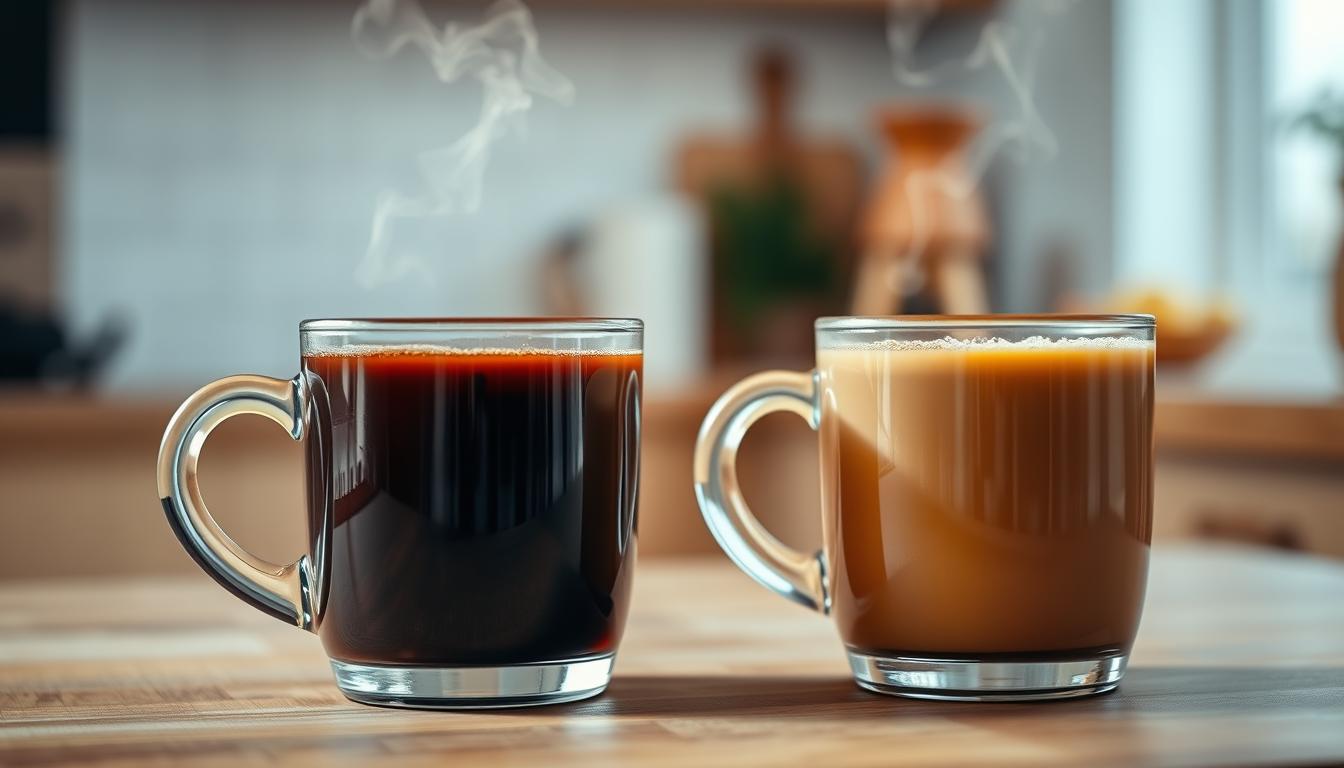
Choose the right beans to reduce bitterness and improve coffee flavor
Choosing the right beans is a simple way to make your coffee less bitter. Think about what you like in your coffee. Lighter roasts and certain origins bring out bright, fruity notes.
Darker roasts or low-grade blends often have roasty, smoky flavors.
How roast level affects bitterness: light, medium, dark
Light and medium roasts keep more of the bean’s natural sugars and acids. These roasts taste sweeter and cleaner, making your coffee less bitter.
Dark roasts, like French or Italian roast, get toasted and bitter during roasting. Over-roasted beans can hide defects but make coffee taste more bitter.
Bean origin and flavor tendencies
The place where coffee beans come from affects their taste. Coffees from Ethiopia and Colombia often have fruity, floral, or caramel notes.
These flavors can make your coffee taste better. Indonesian coffees, like those from Sumatra or Papua New Guinea, have earthier, herbal, and sometimes bitter tones.
Vietnamese beans, often robusta heavy, can also be quite bitter.
Specialty-grade beans vs. low-grade robusta: why quality matters
Specialty-grade beans usually have a better balance and complexity. They are less likely to be one-dimensionally bitter.
Choosing specialty beans will often give you clearer sweetness and more nuanced flavors. Low-grade robusta and cheap blends, on the other hand, tend to be more bitter and harsh.
| Factor | Tendency | How it helps reduce bitterness |
|---|---|---|
| Light roast | Bright, fruity, sweet | Preserves sugars and acids; lowers roasted bitterness |
| Medium roast | Balanced, caramel notes | Offers sweetness with moderate body; reduces harshness |
| Dark roast | Roasty, smoky, bitter | Higher roast-derived bitterness; masks origin traits |
| East African origins (Ethiopia) | Floral, fruity, bright | Natural sweetness and acidity that counter bitterness |
| Latin American origins (Colombia, Costa Rica) | Nutty, chocolate, balanced | Sweetness and clarity reduce bitter perception |
| Indonesian origins (Sumatra) | Earthy, herbal, heavy | Can increase bitter notes; best in blends for balance |
| Specialty-grade Arabica | Complex, balanced | Higher quality reduces one-note bitterness; more flavor choices |
| Low-grade Robusta | Bitter, woody, astringent | Increases bitterness; avoid if you want a smoother cup |
When picking beans, ask local roasters or baristas for tasting notes and roast dates.
Try single-origin light or medium roasts from Ethiopia or Colombia to see how much you can reduce bitterness in coffee.
Swapping to specialty-grade beans is a direct way to improve your coffee’s taste without changing how you brew it.
Adjust grind size to prevent over-extraction and reduce bitter coffee
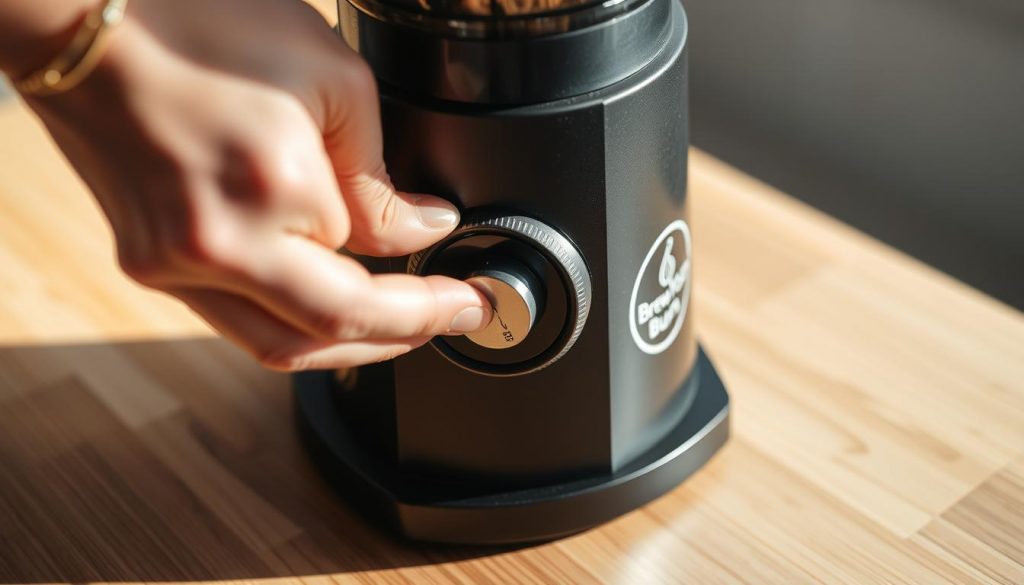
Changing the grind size can greatly improve your coffee’s taste. If your coffee tastes harsh, try adjusting the grind.
A finer grind extracts flavors faster, which can bring out bitter notes. A coarser grind, on the other hand, extracts slower and keeps the coffee sweeter.
How particle size changes extraction speed across brewers
Grind size affects how fast water pulls out flavors. Finer particles have more surface area. This means they release acids, sugars, and bitter compounds quicker.
Coarser particles extract slower, which can help avoid over-extraction. Adjust the grind to match your brewer for the perfect extraction.
Practical grind recommendations for common brewers
These grind recommendations are a good starting point.
They help you avoid bitter surprises. Start with these and make small adjustments as needed.
- Pour over (Hario V60, Kalita): medium-fine to medium. If it’s too bitter, try a coarser grind to speed up extraction.
- French press: coarse. If it’s too bitter, shorten the steep time or make the grind slightly coarser.
- Drip filter (automatic): medium. If it’s too bitter, coarsen the grind or shorten the brew time.
- Espresso: very fine. If it’s too bitter, make the grind slightly coarser or shorten the shot time and dose.
Troubleshooting taste changes when you tweak coarseness
Coarsening the grind usually makes the coffee less bitter. But, be careful not to go too far. Too much coarseness can make the coffee taste sour.
If it tastes bright or thin, try making the grind finer in small steps.
Change one thing at a time. A small change in grind size can make a big difference. Keep track of dose, brew time, and water temperature as you test.
This way, you can make controlled and repeatable adjustments.
| Brewer | Starting grind | If bitter | Why it helps |
|---|---|---|---|
| Pour over (V60, Kalita) | Medium-fine to medium | Move one step coarser | Speeds drain, shortens contact time, reduces bitter compound extraction |
| French press | Coarse | Shorten steep time or coarsen slightly | Reduces prolonged immersion that pulls bitter oils |
| Drip filter (automatic) | Medium | Coarsen grind or cut brew time | Balances flow rate to avoid excessive extraction |
| Espresso | Very fine | Make grind slightly coarser or reduce shot time/dose | Prevents over-extraction from excessive surface area and long shots |
Tweak brew time and technique to stop over-extracting and improve coffee taste
Changing a few simple timing habits can make a big difference. Small tweaks can greatly improve the taste of your coffee.
Start with a clear baseline and test one change at a time.
French press tips are easy to apply. If your press tastes harsh, try plunging 15–30 seconds earlier. The usual time is 3.5–4 minutes.
Start with 3–3.5 minutes, taste, and then adjust by small steps.
Aeropress timing can cut bitterness without complex recipes. Shorten steep times or try an inverted method.
Reducing steep time by 10–20% can make a difference. Small drops in contact time often reduce bitter extraction while preserving body.
Pour over technique controls drain time and saturation. Faster pours and a heavier initial pour lower total contact time.
Pulse pours let you wet evenly without long contact. If the cup is bitter, try a coarser grind and slightly quicker pours to shorten the run.
Follow a simple protocol to evaluate changes. Record grind, dose, water temperature, and total brew time for a baseline.
Change only one timing variable by about 10–20% or 10–30 seconds depending on the brewer. Taste and compare.
Repeat up to two or three small iterations. Note flavor shifts, and stop once sweetness and clarity improve.
This controlled approach helps you reduce over-extraction while keeping balance and clarity in the cup.
Control water temperature and quality to eliminate coffee bitterness
Water is the biggest part of your coffee. Changing the temperature and mineral content can make your coffee taste better or worse.
Follow these steps to get the right water temperature and improve your coffee’s taste.
Optimal brewing temperature range and why hotter water causes bitterness
Experts agree that the best brewing temperature is between 195–205°F. This temperature extracts all the flavors and oils from the coffee beans.
If the water is too hot, it pulls out the bitter flavors too quickly.
To get the right temperature, let your kettle cool down for 60–120 seconds after boiling. This usually gets it to the right range.
For espresso, use the higher end of the range. For light roasts, use the lower end to keep the flavors bright.
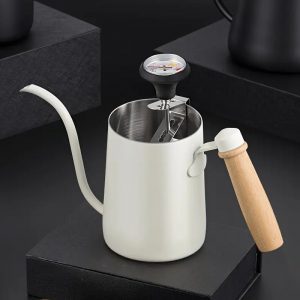
Coffee thermometers needn’t cost the Earth!
How to measure or achieve correct temperature without a thermometer
Not everyone has a thermometer. Let your kettle cool for 60–120 seconds after boiling. This usually gets it to the right temperature.
Practice to learn how your kettle cools.
Electric kettles with variable temperatures are easy to use. If you have a stovetop kettle, test the temperature by taste until you get it right.
Water quality: using filtered, spring, or treated water to improve bitter coffee
Coffee is mostly water. Hard water or water with chlorine can make it taste bitter. Using water with the right mineral balance can make it taste sweeter.
Good options include filtered water, bottled spring water, or treated water.
Changing your water can make your coffee taste better and less bitter.
| Water Option | Typical Mineral Profile | Effect on Flavor | How to Use |
|---|---|---|---|
| Filtered (carbon filter) | Moderate minerals, reduced chlorine | Cleaner cup, fewer chemical off-notes | Use daily for drip, pour over, French press |
| Bottled spring water | Natural minerals vary by brand | Can enhance sweetness and mouthfeel | Compare brands; pick one that tastes neutral or slightly mineral |
| Distilled + mineral packets | Customizable to ideal brewing specs | Precise, repeatable clarity and balance | Mix per packet instructions for consistent results |
| Hard tap water | High calcium/magnesium | May amplify bitterness and dull flavors | Use only after filtration or softening |
Try one change at a time. Start with cooling your kettle, then try filtered water. Each step helps you make your coffee taste better.
Correct coffee-to-water ratio and dosing to reduce bitterness
Getting the coffee-to-water ratio right is key to better coffee. Small changes in dose or water can make a big difference.
Use clear targets and simple measuring tools for consistent results.
Recommended ratios for balanced extraction
Start with brew ratio recommendations between 1:15 and 1:17 (coffee:water by weight). For pour over, try 20 g coffee to 300–340 g water (1:15–1:17).
French press often does well near 1:15. Espresso follows different rules, so tune dose and yield carefully rather than using drip rules.
How too much water or too little coffee raises bitterness
If you add too much water for the amount of coffee, each particle sees more water and can over-extract bitter compounds.
Using too little water or a very coarse grind causes under-extraction and sour notes instead. Balance dose, grind, and time to hit the sweet spot.
Practical tips to weigh coffee for consistency
- Use a digital kitchen scale for both coffee and water. Scales remove guesswork and improve repeatability.
- Record each brew’s coffee weight, water weight, grind size, and time. Small steps matter; move from 1:16 to 1:15.5 and note tasting differences.
- Change one variable at a time. If you adjust dosing to reduce bitterness, keep grind and time steady so you can identify the effect.
When you weigh coffee for consistency, you make dosing to reduce bitterness a predictable process.
Track outcomes and tweak in small increments until the cup tastes balanced and bright.
Quick at-home fixes and remedies for a bitter cup
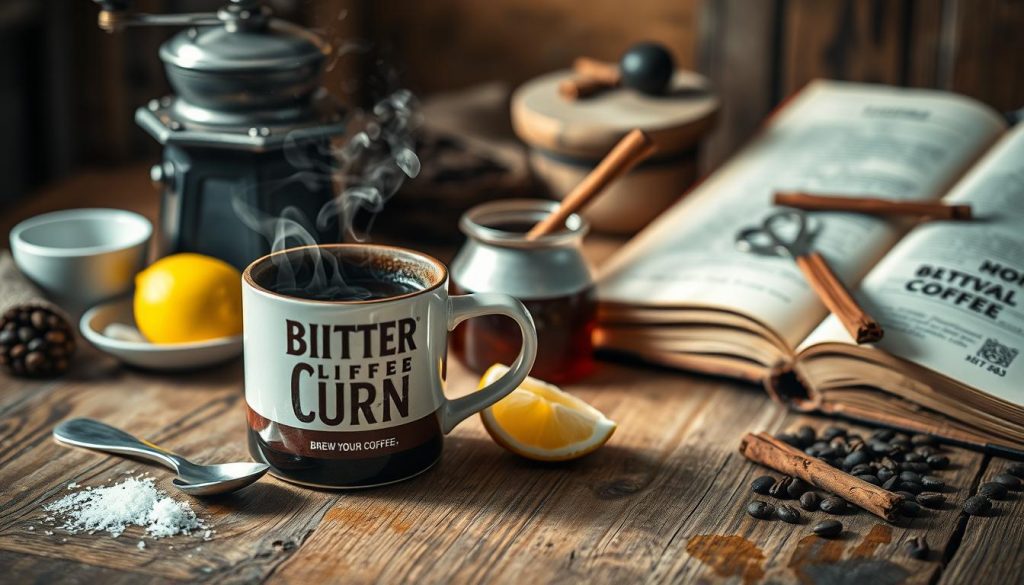
You brewed a cup that bites. Before you rebrew, try a few quick fixes. They use items you likely have at home.
These methods aim to soften harsh notes, making your cup drinkable.
Adding a tiny pinch of salt: how it works and safe amounts to use
A tiny pinch of salt in coffee can reduce bitterness. It dulls bitter receptors on your tongue. Start with a few grains in a full 8–12 ounce cup and stir well. Taste before adding more.
Be cautious.
Too much salt can make the cup taste salty instead of bitter. Use the smallest amount that makes the brew smoother.
Milk or cream to soften bitterness: when dairy helps and when it masks flavors
Adding milk to reduce bitterness works because fat and lactose round bitter compounds. A splash of dairy often makes the drink feel smoother and fuller.
Try whole milk, half-and-half, or a single teaspoon of heavy cream for a richer result.
Choose this option when you do not mind losing some origin details. If you want to preserve terroir or subtle notes, add a little at a time and taste between pours.
Blending with a milder brewed coffee or cold brew to balance bitterness
A practical blend to fix bitter coffee is to dilute the sharp hot brew. Use a milder brewed coffee or a cold brew concentrate.
Cold brew typically has lower acidity and less bitterness, so it mellows a too-harsh cup without salt or dairy. Mix small amounts until the balance feels right.
This method keeps more of the coffee’s character than heavy masking. It works well when you have an extra pot or a bottle of ready-made cold brew from a brand like Stumptown or Starbucks on hand.
- Quick bitter coffee fix methods: salt in coffee for urgent smoothing, milk to reduce bitterness when you prefer creaminess, blend to fix bitter coffee with a milder batch or cold brew.
- Use small steps. Taste after each tiny change to avoid over-correcting.
Bitter coffee troubleshooting: brewer-specific tips and common mistakes
If your coffee tastes too harsh, start by checking your brewer. Small changes can make a big difference. Look at the grind, how long it steeps, and how you wet the grounds.
Take notes and taste after each change to find the right fix.
Pour over
Pour over coffee can be too bitter if the grind is too fine or the coffee bed is uneven. Level the bed and pre-wet it gently to settle the fines.
Try a slightly coarser grind and use pulse pours to slow down the flow and get even extraction.
If water flows too fast on one side, adjust your pour to center and use a swirl to fix uneven saturation.
French press
French press coffee can be bitter if it steeps for too long or if fines get through the mesh. Use a coarser grind and steep for about 3–3.5 minutes as a starting point.
Stir gently once to hydrate, then press with steady pressure.
Pour immediately into a server to stop extraction and avoid lingering bitterness.
Espresso
Espresso can be too bitter if the grind is too fine, the shot time is too long, the dose is wrong, or if you’re using a very dark roast.
Make the grind slightly coarser and reduce shot time or yield. Adjust the dose downward if the cup tastes muddy.
Try a medium roast or a specialty Arabica blend for a cleaner profile when dark roast extracts feel heavy.
| Brewer | Common Cause | Quick Fix |
|---|---|---|
| Pour over | Channeling, fine grind, uneven bed | Pre-wet bed, coarsen grind slightly, pulse pour to even flow |
| French press | Long steep, fines through mesh, over-agitation | Use coarse grind, shorten to 3–3.5 min, pour off immediately |
| Espresso | Too-fine grind, long extraction, dark roast | Make grind coarser, reduce shot time, try lighter roast or adjust dose |
Use these tips as a checklist to adjust your bitter coffee. Change one thing at a time so you can see what works. Keep tasting and be patient; small changes lead to big improvements.
Conclusion
Too much bitterness in your coffee usually comes from one main cause. First, figure out if it’s the beans, grind, brew time, ratio, or water quality.
Change just one thing at a time and taste it to find the perfect balance for you.
Next, check the roast level and where the beans come from. Then, adjust the grind size and brew time if needed.
Make sure the water is the right temperature and use filtered water. Fine-tune the coffee-to-water ratio. Small, consistent changes are key to fixing bitter coffee.
A little bitterness can actually make coffee better when balanced. You don’t want to get rid of all bitterness. Instead, aim to balance it with sweetness and acidity.
Try one change today, like coarser grind or shorter steep time, to make your coffee less bitter.
Be patient and careful. Keep track of your changes and use a scale to find what works best for you. Follow these steps to go from bitter to balanced coffee.
Keep trying new things to make your mornings better.
Get this great Tee TODAY plus other great merch from our Teepublic Coffee Shop