
Every day, over a billion people enjoy a cup of coffee. It’s one of the world’s top traded goods, supporting about 125 million people.
Most of it grows in the “bean belt” between the Tropics of Cancer and Capricorn. Small farms produce about three-quarters of the world’s coffee.
The coffee trade is complex. Beans go through many hands: farmers, processors, exporters, roasters, and retailers.
Many growers don’t know where their beans end up or how much they get paid. This makes it hard to see who benefits from each sale.
This guide will help you find fair trade coffee that fits your values and taste. You’ll learn how your choices impact farmer incomes, climate resilience, and supply-chain transparency.
We aim to make it simpler for you to choose the best fair trade coffee for your home or business.
Key Takeaways
- Coffee supports about 125 million livelihoods, mostly on small farms.
- The supply chain includes many actors, which can obscure where value goes.
- Fair trade coffee options help connect your purchase to farmer income and resilience.
- Choosing ethically sourced coffee promotes transparency and long-term sustainability.
- Knowing what to look for makes it easier to find the best fair trade coffee for your needs.
Why Fair Trade Coffee Matters to Consumers
Choosing coffee is more than just about taste. Many people look for beans that help farmers, protect the environment, and tackle climate change.
You can find coffee that meets these standards without losing flavor.
Global coffee industry snapshot
Most coffee comes from small farms, often smaller than seven football fields. Over 872,916 coffee farmers are part of the Fairtrade system.
Fairtrade farmers and workers make up nearly half of all certified communities worldwide.
Common challenges in the coffee supply chain
Market prices can drop drastically. At times, arabica prices have hit lows not seen in over a decade. When prices fall below what farmers need to survive, they face food shortages and no safety net.
Climate change and diseases like coffee leaf rust also hurt farmers. These issues cut yields and make land less suitable for coffee.
By 2050, major producing countries could lose 30–60% of their coffee land.
How conscious buying makes a difference
Your choices have an impact. Demand for ethically sourced coffee pushes companies to offer fair pay and traceability.
Many consumers look for Fairtrade labels and are willing to pay more for reliable sourcing.
Buying fair trade coffee supports projects that help farmers earn a living wage. It also funds community development and climate adaptation.
Supporting sustainable coffee brands encourages investments in better farming practices and local processing.
What Fairtrade Certification Means for Coffee Producers
Fairtrade certification helps farmers earn a steady income and improve their communities. It sets rules for prices, how cooperatives are run, and work conditions. T
his helps small farmers and workers plan for the future and sell better fair trade coffee beans.
Fairtrade Minimum Price and Premium
The Fairtrade Minimum Price is a safety net when prices drop. For about 20 of the last 30 years, it has protected farmers’ incomes.
Prices start at around $1.40 per pound for regular coffee and more for organic, near $1.70.
The Fairtrade Premium is extra money on top of the selling price. It’s about $0.20 per pound. Cooperatives decide how to use this money.
They often invest in better equipment, seedlings, and community projects like schools or clean energy.
Producer governance and representation
Fairtrade makes sure farmers and workers have a say in decisions. They have at least half the votes at meetings.
They also have seats on governing boards, giving them power to negotiate better deals.
When using Premium funds, members vote on what to do with it. This builds trust and links payments to real improvements in farming and services.
Living income and labor protections
Standards aim to raise wages and protect workers. If local wages are very low, a Floor Wage prevents exploitation.
Fairtrade works with the Global Living Wage Coalition to set income standards.
Some Premium money goes to improve productivity and quality. This helps increase earnings and move closer to a living income.
The standards also promote safer work, better healthcare, and education.
| Program Element | What It Does | Example Impact |
|---|---|---|
| Fairtrade Minimum Price | Provides a price floor when market prices fall | Helps stabilize household income during market crashes |
| Fairtrade Premium | Extra funds for cooperative-directed projects | Purchases of seedlings, processing upgrades, and community services |
| Producer Governance | Ensures farmers and workers hold 50% voting power | Stronger bargaining power and transparent project choices |
| Living Income Strategies | Benchmarks and investments to close income gaps | Higher wages, better productivity, improved quality of fair trade coffee beans |
| Labor Protections | Standards for wages, health, and safety | Reduced child labor risk and safer working conditions |
How to Identify Ethically Sourced Coffee Brands
Finding ethically sourced coffee is easier when you know what to look for. Look for brands that tell you where their beans come from.
They should also share how the beans were grown and what they pay farmers.
Labels and certifications to look for
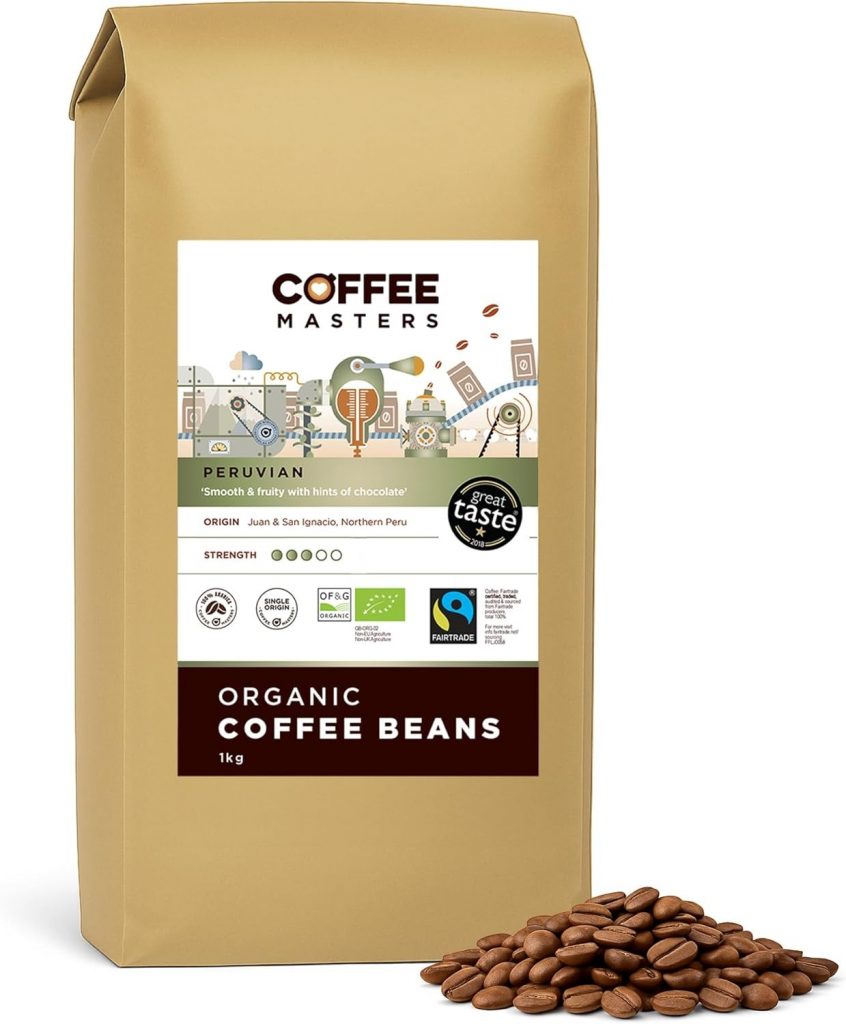
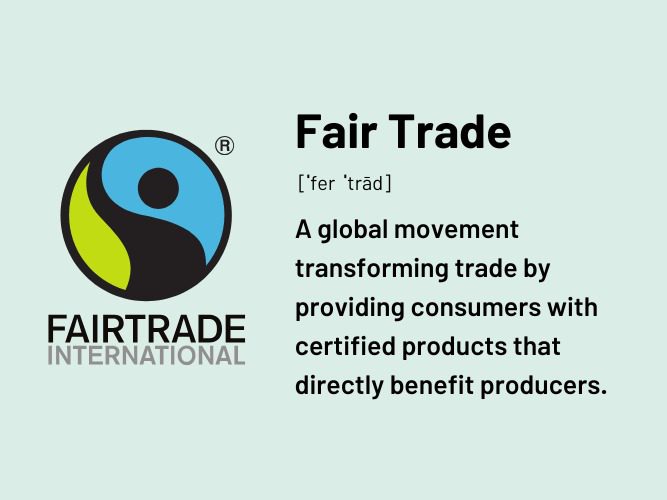
Trust badges are important. Look for Fairtrade certification from Fairtrade International and FLOCERT audits.
This is the most recognized sign of fair trade coffee. Also, check for shade-grown, organic, and verified carbon or biodiversity claims.
Brand transparency and traceability
Good brands share where their coffee comes from and who they work with. They tell you about their sourcing plans and how they invest in farmers.
This openness confirms the coffee is ethically sourced.
Questions to ask roasters and retailers
When shopping, ask simple questions. Where did the beans come from, and which cooperative supplied them?
Is the coffee Fairtrade certified or Fairtrade Organic?
Ask how much of the purchase price goes to farmers. Also, find out what the brand does with Fairtrade Premium funds.
Clear answers show they’re committed to ethical sourcing.

fair trade coffee options
Choosing fair trade coffee depends on your lifestyle and values. You can pick beans for longer freshness and control, or ground coffee for quick use.
Think about your brewing method, storage, and the effort you want in each cup.
Whole-bean vs. ground Fairtrade coffee
Whole-bean Fairtrade coffee keeps its aroma and freshness better. Grinding just before brewing ensures the right grind size for your method.
Whole beans offer the most flexibility if you roast at home.
Ground Fairtrade coffee is easy to use. Cafés and offices often choose it for fast service.
Make sure the grind size matches your brewer when buying ground coffee.
Fairtrade Organic choices
Organic fair trade coffee combines ethics with farming. Over half of Fairtrade coffee is also organic.
This supports soil health and reduces chemical use.
Organic fair trade coffee often gets extra money for producers. This money funds community projects and processing improvements.
Look for both organic and Fairtrade certifications for the best impact.
Shade-grown and environmentally friendly coffee options
Shade-grown coffee grows under native trees. It supports wildlife and reduces erosion. Shade-grown coffee works well with diverse, resilient farms.
Look for Fairtrade coffees with labels on water-saving, regenerative practices, or agroforestry.
Fairtrade’s Climate Standard helps cooperatives earn credits for renewable energy and reforestation.
| Feature | Whole-bean Fairtrade | Ground Fairtrade | Organic Fairtrade | Shade-grown / Environmental |
|---|---|---|---|---|
| Freshness | Highest when ground before brewing | Good if the ground date is recent | Maintains freshness with proper storage | Depends on processing; often careful handling |
| Convenience | Requires a grinder and time | Ready-to-use for fast service | Same convenience as non-organic forms | Often sold by specialty roasters; varies |
| Producer benefits | Supports Fairtrade minimums and premiums | Same Fairtrade supports, useful for businesses | Higher premiums and soil health benefits | Supports biodiversity and climate resilience |
| Best for | Home brewers, specialty espresso | Cafés, offices, fast brews | Buyers valuing reduced chemical use | Buyers seeking environmentally friendly coffee options |
| How to verify | Check roast date and origin | Check grind size and roast date | Look for organic and Fairtrade seals | Seek notes on shade-grown practices or Climate Standard |
Best Fair Trade Coffee Beans for Different Brewing Methods
Match your brew with the right beans for the best taste.
Roast level, origin, and processing matter. Choose fair trade coffee that suits your brewing method and taste preferences.
Beans for espresso and milk-based drinks
For espresso and milk drinks, medium to dark roasts work best. They hold up well against steamed milk.
Fairtrade-certified blends from Brazil or Guatemala add chocolate and caramel notes to lattes and cappuccinos.
Specialty roasters offer fair trade coffee options for crema and body in espresso machines.
Beans for pour-over and drip
Light to medium roasts highlight the coffee’s origin in pour-over and drip brews. Single-origin Fairtrade coffees from Ethiopia or Kenya offer citrus, floral, and fruity notes.
These notes are brought out by pour-over brewing.
If you prefer clarity and bright acidity, choose fair trade coffee beans with single-origin labeling and a lighter roast.
Cold brew and French press picks
Immersion methods like cold brew and French press favor coarse grind and bold-bodied beans. For these methods, select beans with low acidity and cocoa or nutty profiles.
Fairtrade Organic robusta blends or darker Arabica blends are great for thick, smooth cold brew.
Check the roast level and origin to match brewing time and water temperature for the best result.
When shopping, look for fair trade coffee options. Compare tasting notes, roast level, and roast dates.
This helps you find the best fair trade coffee for your routine while supporting ethically sourced coffee for producers.
Sustainable Coffee Brands and Direct Trade Alternatives
When you shop for coffee, you have two main choices: fair trade coffee options and direct trade coffee. Both aim to help farmers and improve coffee quality.
Fairtrade coffee has a Minimum Price and a Premium for community projects. Direct trade coffee focuses on direct relationships and often pays more, but lacks a single safety net.
Comparing Fairtrade and direct trade
Fairtrade has clear rules for price, worker rights, and governance. These rules make it easy to measure and track outcomes.
Direct trade, on the other hand, lets roasters negotiate directly with farms, focusing on quality and payment.
Fairtrade Premiums fund projects like water systems and schools. Direct trade may support specific programs like training or micro-investments.
You should consider the verified protections of fair trade and the targeted investments of direct trade.
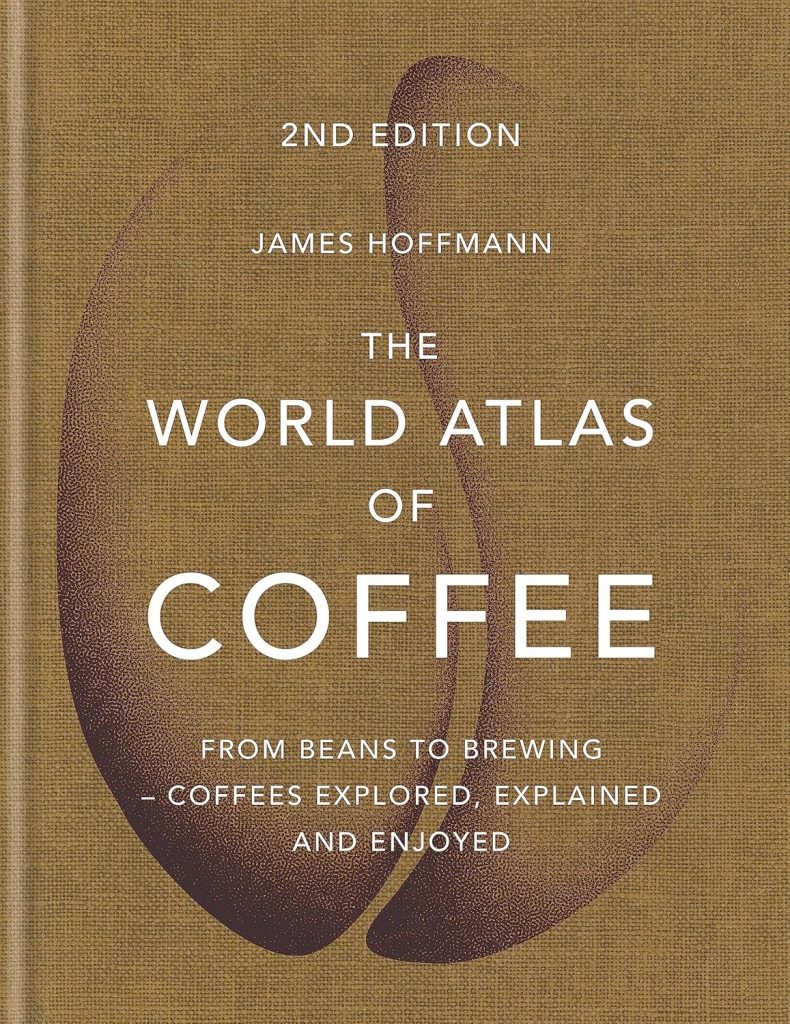
You can find out everything you need to know about fair trade coffee in this fascinating book
Sustainable coffee brands to watch
Look for roasters that publish impact reports and traceability data. Brands like Starbucks and Stumptown offer fair trade options and are transparent about their sources.
Smaller roasters share farm-level information and work with cooperatives to support farmers.
Choose brands that combine certification with clear reporting.
The best producers show how Premium funds were used and how they improved farmer income and farm resilience. This clarity helps you choose coffee with confidence.
How brands invest in producer communities
Fairtrade Premiums often fund clean electricity, schools, and healthcare. Brands and cooperatives use these funds for infrastructure and climate projects.
This includes drought-resistant seedlings and soil-restoration training.
Some roasters also fund their own programs. They support training, quality labs, and market access to raise incomes.
Partnerships with organizations like UNIDO and monitoring tools help farmers get better prices for quality beans.
| Feature | Fairtrade Certified | Direct Trade | What to look for |
|---|---|---|---|
| Price guarantees | Minimum Price plus Premium | No standard guarantee; negotiated prices | Proof of Premium projects or purchase agreements |
| Audit and standards | Independent audits and clear criteria | Varies by roaster; limited third-party audits | Impact reports and third-party verification |
| Community investment | Premium funds used for schools, clinics, and climate work | Targeted investments like training and equipment | Transparency on funded projects and outcomes |
| Traceability | Documented supply chains and cooperative records | Often, farm-level traceability depends on the roaster | Farm or lot-level trace data and buyer statements |
| Best fit for buyers | Buyers seeking verified, systemic protection | Buyers seeking specialty quality and direct impact | Match your priorities for ethics and taste |
How Fairtrade Supports Climate Resilience and Environmental Practices
Fairtrade connects climate action with farmer needs. It shows how standards and practices protect livelihoods and landscapes.
This guide offers practical steps and tools for cooperatives to adapt to weather changes and keep ecosystems healthy.
Fairtrade Climate Standard sets a framework for carbon projects. It focuses on producer voices, energy efficiency, and renewable energy.
Developed with Gold Standard, it ensures rigor and local decision-making. Cooperatives can earn Fairtrade Carbon Credits to fund community projects.
Fairtrade Premium funds help farmers at the farm level. They buy drought-resistant seedlings and get climate-smart agriculture training.
Programs like these help farmers recover from disasters, like coffee rust in Honduras.
Shade-grown coffee and agroforestry systems protect habitats and improve yields. Trees help reduce heat stress, support pollinators, and store carbon.
Many cooperatives use these methods to balance production and conservation.
Satellite tools offer more protection. Fairtrade’s partnership with Satelligence lets cooperatives monitor deforestation risks.
This data helps manage landscapes, plan reforestation, and protect conservation areas. It also supports better land-use choices.
- Carbon projects: fund local renewables and reforestation through Fairtrade Carbon Credits.
- Farm resilience: invest Fairtrade Premium in seedlings, soil health, and training.
- Biodiversity: promote shade-grown coffee and agroforestry to preserve habitats.
Choosing fair trade coffee supports systems that value both people and the planet.
This approach encourages producer-led climate action. It helps create a greener coffee supply chain.
Buying Fair Trade Coffee for Home and Business
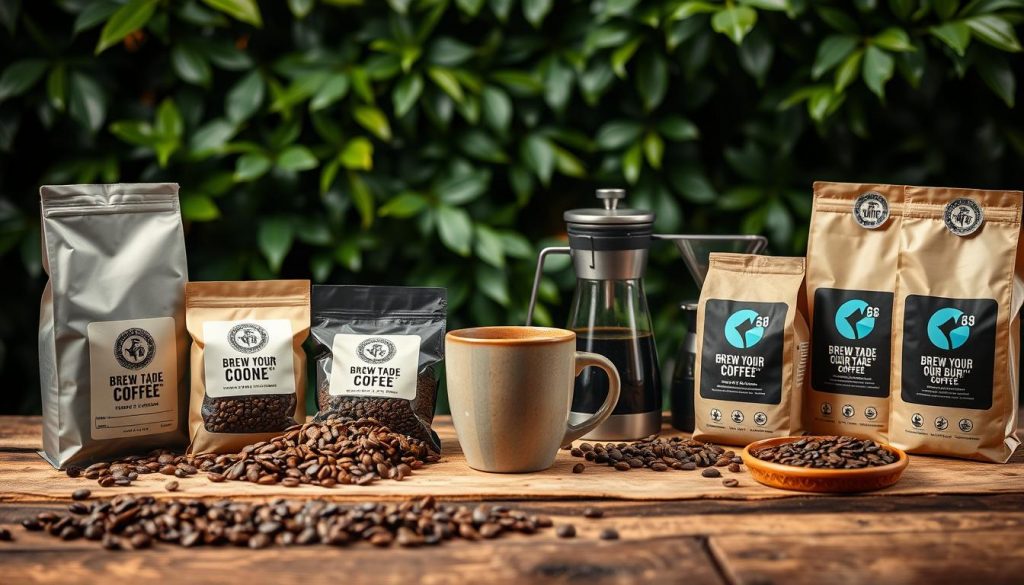
Choosing fair trade coffee is about taste, ethics, and cost. Think about roast level, origin, and processing.
Match these with certification labels and prices. This way, you can enjoy great flavor and support producers.
How to choose for taste, ethics, and budget
Choose roast and origin based on your taste. Light roasts show off notes from places like Ethiopia or Colombia. Dark roasts are better for milk drinks.
Look for Fairtrade or USDA Organic marks for ethically sourced coffee. These labels mean better standards for farmers and the environment.
Set a budget that works for you. Many people pay a bit more for coffee that’s fair trade. For home, try small bags from places like Intelligentsia or Equal Exchange.
For businesses, buy in bulk to save money while keeping fair trade coffee available.
Serving Fairtrade coffee in your business
Show the certification on menus and packaging to build trust. Tell the story of the coffee: where it’s from, and how it helps the community.
Customers like knowing this when they choose where to buy coffee.
Be clear about roast, taste, and milk pairings on your menu. Offer single-origin pour-overs and a house blend.
Show how you brew it and have your staff ready to talk about it.
Inventory and sourcing tips for retailers
Have a variety of roasts, grind sizes, and packaging. Offer whole-bean and ground options to meet different needs.
Make sure your suppliers give you origin and cooperative details to share with customers.
Work out good supply deals and fair payment terms. Suppliers who help with financing or stable contracts are key.
Keep track of sales to update your stock and keep popular fair trade coffee options available.
Small steps like clear labeling, staff education, and reliable sourcing make fair trade coffee a smart choice for homes and businesses.
Common Myths and Realities About Fair Trade Coffee
Many shoppers wonder about fair trade coffee and how it stacks up against other options. This guide aims to clear up common misconceptions.
It helps you pick the best fair trade coffee and ethically sourced coffee for your taste.
Myth: Fairtrade means lower quality.
Reality: Fairtrade certification doesn’t mean lower quality. Producers get training in processing and cup evaluation. Many Fairtrade coffees are organic, leading to cleaner flavors.
Myth: Fairtrade is just a label with no impact.
Reality: Fairtrade ensures income stability with a Minimum Price and a community Premium. These funds help with schools, clinics, and farm infrastructure. Audits from FLOCERT verify these benefits, making Fairtrade coffee a reliable choice.
Myth: Direct trade is always better for farmers.
Reality: Direct trade can offer higher prices and closer relationships. But, it lacks a standardized Minimum Price and a mandatory Premium.
Fairtrade provides collective protections and predictable community projects that direct trade doesn’t offer.
When choosing, consider the coffee’s origin, cupping notes, and how Premiums are used.
This way, you can find fair trade and direct trade coffee that matches your taste and values.
Conclusion
Choosing fair trade coffee connects your daily coffee to real improvements on farms. Fairtrade ensures fair prices, a Premium, democratic governance, and traceability.
These support farmers, communities, and quality in every roast.
To make a difference, look for Fairtrade labels and ask about Premium use. Choose whole-bean or ground coffee that fits your brewing style.
Support brands that share their impact and traceability.
Your choices have an impact. By choosing ethically sourced coffee, you help protect landscapes and support rural economies.
This leads to a better cup for you and a fairer future for farmers.